
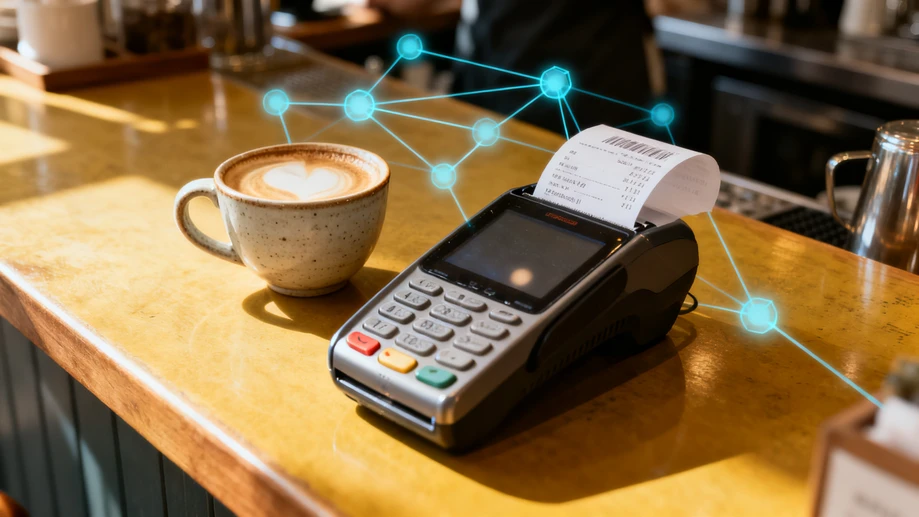
Why Your Morning Coffee Payment Could Soon Skip All The Banks Entirely
Web3’s low-key real world applications are making small daily transactions smoother and cheaper without most people noticing the shift
Every time you tap your phone to pay for a latte on the way to work, you rarely think about the 7 different intermediate institutions that process that single payment in the background. The transaction will take up to 48 hours to fully settle between your bank, the payment processor, the coffee shop’s merchant account, and several clearing networks, and an average 2 to 3 percent of the total amount gets siphoned off as service fees that neither you nor the coffee shop owner ever see. For decades, this system was seen as the only viable way to move money between two parties across different account systems, and almost no ordinary users ever stopped to question if there was a simpler, more straightforward option available for these tiny, frequent purchases that make up most of our daily spending.
That simpler option is exactly what Web3 is bringing to mainstream use right now, far away from the loud hype cycles of speculative token projects that most people associate the entire technology category with. Unlike traditional financial systems that require a central authority to keep track of every account balance and verify every transaction, Web3 payment tools run on distributed public ledgers that are maintained by thousands of independent nodes across the world, with no single company or bank holding full control over the network. This design means that a payment sent from one wallet address to another will clear in less than 10 seconds, no matter where the two parties are located on the planet, and the total processing fee usually lands somewhere between 0.01 and 0.5 percent of the total transaction value, a fraction of what traditional payment processors charge. Merchants no longer have to wait days for funds to hit their operating accounts, and they do not have to submit dozens of paperwork forms to get approved for a merchant payment account to start accepting digital payments.
A common misconception that stops ordinary people from trying these tools is the false idea that Web3 requires advanced technical knowledge, dozens of complicated setup steps, and a permanent risk of losing all your funds if you forget a 12-word secret recovery phrase. Modern user-facing Web3 payment products have already stripped away all that unnecessary complexity, working exactly the same way as the mobile payment apps people already use every day. Users can link their existing phone number or biometric verification method to their wallet, and confirm small everyday payments with a quick tap or face scan, with no need to memorize long alphanumeric strings or dig through confusing settings menus. Hundreds of independent cafes, bookstores, craft shops and local food vendors across North America, Europe and Southeast Asia have already added these Web3 payment options to their checkout counters in the past two years, letting customers choose to pay with no extra fees for either side.
Beyond point of sale payments, Web3 is quietly upgrading dozens of other tiny daily routines that almost no one connects to blockchain technology right now. Independent content creators can receive direct support from their audience without 30 percent of their earnings being siphoned off by large social media platform algorithms and payout rules, and digital membership passes can be shared across different small businesses in a local neighborhood collective with no centralized admin team to manage the system. Secondhand product listings can come with full, unalterable transaction records stored on chain, so buyers can confirm the origin of a vintage camera or a secondhand skateboard without relying on the seller’s unproven verbal claims, eliminating almost all of the common fraud cases that pop up on mainstream secondhand trading platforms.
None of these use cases require flying cars, fully immersive virtual reality headsets or any of the over-the-top science fiction scenarios that get hyped in viral tech marketing posts. The vast majority of Web3 development teams are building tools that slot directly into existing daily routines, no disruptive overhauls required. You will not need to create a whole new online identity or buy expensive specialized hardware to use these features, since they are being built to integrate seamlessly with the phones and payment tools you already carry in your pocket right now. The coming shift will not arrive with a big flashy press announcement, it will slowly become normal one transaction at a time, until you one day realize you no longer have to wait for cross border payments to clear, or fight a customer service line to reverse an unfair transaction fee that had no valid justification to exist in the first place.