Is Your Coffee Cup Secretly Funding the Next Web3 Revolution?
How Shared Value and Tiny Transactions Are Rewriting the Rules of Ownership
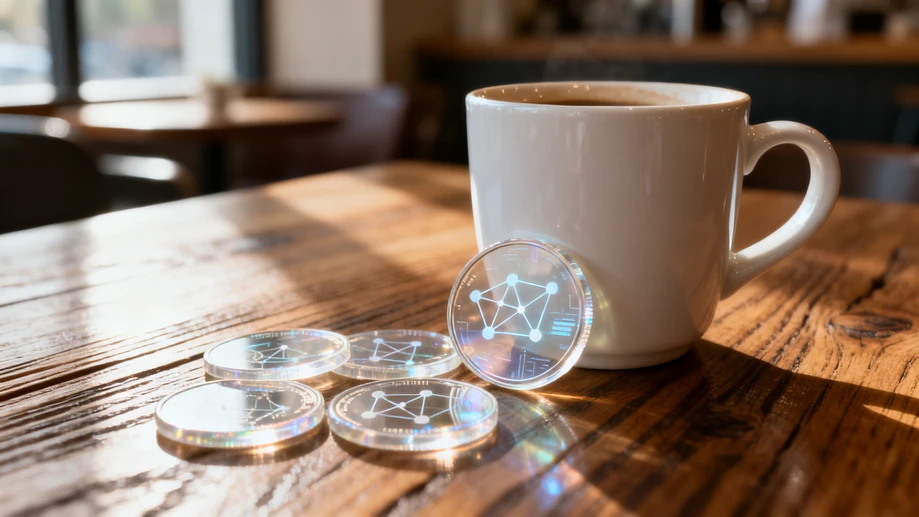
Imagine your favorite local coffee shop. Instead of just buying a latte, what if your purchase also gave you a tiny, digital stake in the shop itself? Not shares in some distant corporation, but a verifiable piece of the community hub you love. This isn't fantasy; it's a glimpse into the practical magic of Web3, where the internet evolves from a place we merely visit to something we collectively own and shape. Forget complex jargon for a moment. Web3, at its heart, is about shifting power and ownership back to users through technologies like blockchain, enabling new models for collaboration, value exchange, and community governance that feel surprisingly tangible.
The engine making this possible is blockchain technology. Think of it less as a mysterious digital ledger and more like a super-secure, public notebook that everyone can see but no one can secretly alter. Every transaction, every piece of data added, is permanently recorded and linked to the ones before and after it, creating an unbreakable chain. This transparency and security are fundamental. It allows strangers on the internet to trust each other without needing a big company like a bank or a social media platform acting as the middleman, verifying identities and enforcing agreements. Suddenly, direct peer-to-peer interactions become feasible and secure on a massive scale.
This brings us to tokens – the versatile building blocks of Web3 value. They aren't just cryptocurrencies like Bitcoin for buying things online. Tokens can represent almost anything of value: ownership in that coffee shop (a "community token"), access to exclusive online content (a "membership token"), proof you own a unique digital artwork (an NFT), or even a vote in a community decision. Crucially, these tokens live on the blockchain, meaning their ownership and history are transparent and secure. You truly hold them in your digital wallet, unlike points in a corporate loyalty program controlled by a single company. This tokenization allows for micro-ownership and micro-transactions, enabling entirely new economic models where value flows directly between creators and consumers, or among community members.
One of the most exciting applications is the rise of Decentralized Autonomous Organizations (DAOs). Picture a book club, but instead of just choosing the next read, members collectively own the club's funds, vote on its rules, and decide its future direction – all using tokens and transparent voting mechanisms recorded on the blockchain. DAOs are internet-native communities governed by code and shared ownership, not a CEO or a board. They can fund projects, manage shared resources (like a community treasury for that coffee shop), or even purchase physical assets. While still evolving, DAOs demonstrate how Web3 enables communities to organize and collaborate with unprecedented levels of trust and shared purpose, moving beyond simple online forums to actual collective ownership and action.
So, where does this touch your daily life beyond theoretical coffee shops? It's in artists selling digital art directly to fans as NFTs, bypassing galleries and keeping more of the profits. It's musicians offering special perks and a share of streaming revenue to token-holding supporters. It's gamers truly owning their in-game items as NFTs, able to sell or trade them freely outside the game's walled garden. It's communities collectively funding local solar projects or supporting independent journalism through micro-donations tracked transparently. It's about verifying the authenticity and journey of a sustainably sourced product directly from the blockchain record. These aren't distant sci-fi concepts; they are real applications happening now, built on the principles of verifiable ownership, direct value exchange, and community governance.
Web3 isn't about replacing the current internet overnight. It's an evolution, offering new tools for building a digital world where users aren't just the product, but active participants and owners. It promises an internet where value is shared more equitably, communities have real agency, and trust is built into the system through technology, not just brand names. The journey is just beginning, filled with experimentation and learning. But the core idea – that the digital world we inhabit can be one we collectively build and own – is a revolution quietly brewing, perhaps even funded by your next cup of coffee.